
For the Love of Chintz by Kelly L. Moran (Thaxted Cottage
Publishers, 2000)
Reviewed by Karen Callaway
Driving one day from her home in
Washington, D.C., to visit family in western Virginia, author Kelly Moran
decided to stray from her normal route of highways and main roads and instead
take the more scenic winding byways to her destination. Her usual two-hour tour
took a bit longer as Kelly, her husband, and her son wound their way through
charming little towns until they came to Hamilton, just outside of Leesburg.
There she found an absolute plethora of antique shops. In a moment reminiscent
of young Natalie Wood in the original Miracle on 34th Street, Kelly cried out, “Stop the car! Stop the car!”
The reason for Kelly’s enthusiastic
outburst was a tiny yellow antique shop tucked among the others. She felt
inexplicably drawn in. With her husband and son shaking their heads in
amusement, Kelly opened the door and fell in love. The object of her affection
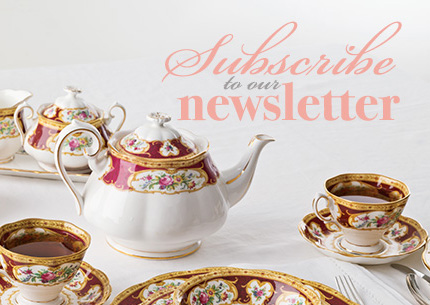
was sitting in a corner cupboard: a Shelley chintz teacup and saucer with a
hefty price tag of $45.
Kelly says, “I am not a
‘girly-girl,’ and I was quite surprised that I was attracted to such feminine
china.” As a devoted gardener, Kelly knew that part of her interest stemmed
from the gorgeous floral pattern covering the set. Gardening and landscape
design perfectly blended her love of flowers with her background in fine arts.
Thinking the cup and saucer a rather silly purchase, however, Kelly left the
shop empty-handed.
But as all avid antique hunters know,
when you find something you love, you should buy it. Kelly returned to the
little shop on her way home and bought the Shelley chintz. She placed her prize
on the mantel and admired it every time she passed by. The tenderhearted Kelly
soon realized the teacup and saucer were “lonely.” To remedy the situation, she
bought more and more Shelley china until quite a collection of the beautiful
dinnerware occupied every available surface throughout her home.
These days, Kelly has a way of
throwing herself whole-heartedly into the things that interest her, and her
newfound love of Shelley china is no exception. As Kelly researched Shelley
chintz, she discovered that there were collector’s clubs not only in the United
States, but also in the United Kingdom, Australia, Canada, and South Africa.
She subscribed to the newsletter and found that legions of Shelley fans
worldwide shared her passion.
As Kelly investigated the story of
Shelley Pottery for her own interest, she realized that corralling all this
information into book form would be a helpful tool for anyone who shares her
love of all things Shelley. Her book, Shelley Chintz: Unlocking the Secrets
of the Pattern Books, is her gift not only
to Shelley collectors, but to all who appreciate tea wares and beautifully
illustrated books.
As she dug further into the history
of chintz china, Kelly uncovered the origins of chintz fabric as well. The
story began in India during the 17th century when skilled artisans
mastered the art of printing elaborate patterns on fabric using specialty dyes
to fix the colors. These fabrics were quite costly—so much so that as Dutch and
Portuguese traders introduced them to Europe, none but the wealthiest
collectors could afford them. That drove the desire for chintz to frenzied heights
and eventually led to a British ban on the imported fabric in an effort to
rally support for English textiles.
Eventually the process for
fabricating chintz made its way across Europe, and chintz made the leap from
bolts to pottery. Shelley Chintz chronicles
the rise of chintz china production, as well as the history of Shelley Pottery
through its various mergers. The company was absorbed by Royal Doulton in 1971.
In 1998, the Shelley UK Club
arranged for Kelly to view the original Shelley Pattern Books stored in the
archives of Royal Doulton in Staffordshire, England. She took advantage of this
rare opportunity to peruse the books containing the inventory of artists’
renderings of each chintz pattern produced by Shelley Pottery.
The very existence of the pattern
books is a miracle. When Royal Doulton purchased Allied Pottery, which owned
Shelley, the company had little interest in maintaining the chintz line and
began destroying molds and tossing out the pattern books. Kelly sees Ray
Reynolds, former head of the Shelley decorating department, as something of an
angel.
“When Ray learned that Royal
Doulton had thrown out those irreplaceable pattern books, he went ‘dumpster
diving’ and retrieved them,” explains Kelly. “They would be lost forever if not
for Ray.” As Kelly worked on Shelley Chintz,
Ray was an invaluable aid, giving her glimpses into the inner workings of
Shelley.
The first “chintzes” Shelley
produced weren’t, by true definition, chintzes at all. Though the actual
patterns were the typical floral that characterize chintz, these early
renditions were monochromatic in color partly because the transfer printing
method was used. This time-consuming method required several steps. An engraver
put the artist’s original design on a copper plate. The printer applied ink to
the plate, followed by tissue paper; both were run through a press. A
“transferer” carefully placed the tissue paper on the piece of pottery and
rubbed it down with a stiff brush. The paper was washed away, leaving the
pattern outline, and the piece was then fired in a kiln.
By the early 1900s, Shelley
abandoned the transfer printing method and began using lithographs to produce
the multicolored chintz patterns that are more familiar today. Since it took
one full day for each color applied, the process was still long and
painstaking, but the use of metallic oxide colors brought such richness and
elegance to the pieces that it was well worth the trouble.
Reading Shelley Chintz is like strolling through a beautiful botanical garden.
Rather than learning the botanical names of exotic plants, readers learn to
recognize the various pattern names and shapes that Shelley produced from 1885
until the last pieces were released in the mid-1960s. Kelly also shares the
stories behind the patterns, as well as information on the artists, craftsmen,
and staff responsible for creating this incredible array of floral
masterpieces.
Whether it is the monochromatic
color scheme of the Clover pattern, or apple blossoms in red and pink on the
popular Maytime Chintz, or the deep, vibrant hues of rare Black Chintz, the
beauty of Shelley chintz is undeniable. Kelly finds it hard to name her
favorite pattern—it is obvious that she loves them all. “I think my most
favorite is Countryside, because it has so many different colors. But I also
love the Briar Rose and Pansy patterns.”
Shelley Chintz includes Kelly’s own “teapot” rating system for
analyzing the value and availability of chintz patterns. This guide helps
collectors navigate the maze of Shelley chintz. Kelly says that eBay has opened
up chintz collecting, which has made pieces readily available. Be forewarned
that Shelley chintz is not inexpensive, but can you really put a price tag on a
thing of beauty?
Kelly believes Shelley china is
superior to the chintz other companies make. She explains that Shelley used a
better base for its chintz patterns, a bone china rather than the heavier
earthenware base other pottery producers used. Bone china combines bone ash
with the ingredients for hard-paste porcelain to create a product that is
stronger but retains the desirable translucent quality.
And there is no denying Shelley’s
desirability. Through her love of Shelley chintz, Kelly has met countless
collectors who share her enthusiasm for this cheerful, flowery dinnerware and
its connection to the serving of tea. She has found “tea people to be genuine,
honest, and down-to-earth,” and treasures the friendships she has made. She met
one gentleman from South Africa at the Dulles International Airport to collect
a teaset she had purchased. Eschewing the strange looks from passers-by, he
insisted on unwrapping the entire set right there in the airport so Kelly could
see that the pieces were indeed undamaged.
Shelley Chintz makes a wonderful addition to any collector’s
library as a priceless reference guide, but it is equally treasured for its
exceptional illustrations and historical insights. Kelly’s love of Shelley
chintz is evident on every page, and it is tempting, if not irresistible, to
find one “lonely” teacup and saucer to begin our own collection.